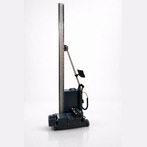
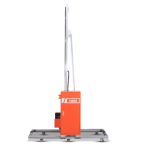
Outdoor wall printing is one of the most visually impactful applications of UV wall printing technology — and one of the most technically demanding. The same chemistry that makes UV ink excellent indoors creates specific challenges outdoors: the sun’s UV radiation that cures the ink also, over time, degrades it.
This guide covers everything you need to know to successfully execute and manage outdoor wall printing projects: the durability science, surface requirements, design principles, protective coating systems, and how to set accurate expectations with clients. The starting point: UV-curable ink outdoors is commercially viable and produces excellent results — when done correctly.
DIRECT ANSWER: OUTDOOR UV PRINT DURABILITY |
Without protective coating: 2–3 years in moderate sun conditions; 1.5–2 years in full-sun, high-UV environments. |
With UV-resistant varnish topcoat: 4–5 years in moderate conditions; 3–4 years in full-sun environments. |
Shaded exterior locations (north-facing walls, under overhangs): 4–5 years without coating; 6–7 years with coating. |
For reference: high-quality solvent ink outdoor print, same conditions, same methodology: 2–4 years without coating. |
1. Why Outdoor Is Different: The UV Radiation Problem
Inside a building, the primary threats to print longevity are cleaning abrasion and occasional humidity. Outdoors, the dominant threat is solar UV radiation — the same ultraviolet light that cures the ink during printing also breaks down the polymer chains in the cured ink over time.
The degradation mechanism: prolonged exposure to UVA (315–400nm) and UVB (280–315nm) solar radiation causes photochemical breakdown of the pigment molecules and the polymer matrix surrounding them. This manifests first as colour shift (reds and yellows fade faster than blues and blacks) and then as surface chalking — where the polymer matrix breaks down and the print surface becomes powdery.
The rate of degradation depends on UV index (location-specific), angle of solar exposure (south-facing walls in Northern Hemisphere receive maximum exposure), hours of daily direct sunlight, temperature cycling, and precipitation frequency.
Environment | Annual UV Index | Expected Life (No Coat) | Expected Life (With Coat) |
|---|
Northern Europe (UK, Germany, Scandinavia) | Low–Moderate (2–4) | 3–4 years | 5–7 years |
Central Europe / Northern USA | Moderate (3–5) | 2.5–3.5 years | 4–6 years |
Mediterranean / Southern USA | High (5–7) | 2–3 years | 3–5 years |
Middle East / North Africa | Very High (7–9) | 1.5–2.5 years | 3–4 years |
Australia / South America | Extreme (8–12) | 1–2 years | 2–3 years |
Shaded exterior (any region) | Low (indirect) | 4–5 years | 6–8 years |
2. Surface Requirements for Outdoor Printing
Outdoor surfaces have different preparation requirements than indoor ones. Full surface guide: What Surfaces Can a Wall Printer Print On?. Key outdoor-specific points:
Exterior Rendered / Painted Walls
The most common outdoor substrate. Requirements: the existing paint must be in sound condition — no peeling, cracking, chalking, or damp penetration. Any structural defects must be repaired and the surface repainted before UV printing. Unprepared exterior paint is the single most common cause of outdoor print failure.
Technical check: inspect the wall for moisture — print onto a damp wall and the ink will not cure correctly, adhesion fails within weeks. Check for rising damp, cracks allowing water ingress, and areas of frost damage before committing to a project.
Concrete (Exterior Grade)
Exterior concrete is highly compatible with UV printing but typically requires a sealer coat before printing — raw concrete is too porous and will absorb ink unevenly. Apply a compatible masonry primer, allow full cure (typically 24 hours), then print. Sealed exterior concrete delivers excellent adhesion and durability.
Brick and Masonry
Smooth-faced brick and sealed masonry print well. Rough or highly porous brick requires a primer coat. Deep-mortar-joint surfaces present positioning challenges for the print head distance sensor at very fine detail — adjust resolution settings downward and use distance calibration before printing.
Metal Cladding and Composite Panels
Aluminium composite panels (ACP) and metal cladding are excellent outdoor substrates — dimensionally stable, non-porous, and compatible with UV adhesion. Clean with IPA before printing; apply a metal adhesion primer for maximum outdoor longevity. ACP-printed outdoor graphics often outlast rendered wall prints by 1–2 years because the substrate does not experience the thermal movement of masonry.
3. Protective Coating: The Decision That Doubles Lifespan
Applying a UV-resistant clear varnish after printing is the single most impactful decision you can make for outdoor print longevity. The wall printer ink forms the primary print layer; the varnish acts as a sacrificial UV-absorbing shield that degrades in preference to the ink beneath it.
Coating Type | Cost (Approx.) | Application Time | Lifespan Extension | Best For |
|---|
UV-resistant clear varnish (spray) | $50–$150 per project | 30–60 min | +2–3 years | Standard outdoor applications |
Anti-graffiti coating (UV resistant) | $100–$300 per project | 60–90 min | +2–3 years + graffiti protection | Urban environments |
Two-component polyurethane coat | $150–$400 per project | 2–4 hrs (cure time) | +3–5 years | Extreme weather environments |
None | $0 | 0 | Baseline | Indoor; sheltered exterior; temporary graphics |
Recommendation: include UV-resistant varnish as standard on all outdoor projects. The cost ($50–$150) is negligible relative to project value; the lifespan benefit significantly improves client satisfaction and reduces the frequency of repeat calls that fall within your implicit quality guarantee.
4. Design Principles for Outdoor Wall Printing
Outdoor wall prints are viewed under different conditions than indoor murals: changing light, viewing distances of 5–50+ metres, weather effects, and the competition of the surrounding urban environment. These conditions favour specific design approaches:
- Bold, high-contrast designs outperform intricate fine-detail work at typical viewing distances of 5–20 metres — consider how the design reads from the street, not from 30 cm
- Deep blues, blacks, and earth tones fade more slowly than bright reds, yellows, and oranges under UV exposure — for maximum longevity, favour these in designs intended to last 5+ years without refresh
- White ink base layer is particularly important outdoors — it provides both colour accuracy on coloured or aged exterior surfaces and an additional protective layer for the colour print above
- Avoid very fine typography at small sizes — weather, distance, and eventual fading reduce legibility of small text faster than large bold graphics
- Design for seasonal light: north-facing walls in winter receive low, angled light that reads differently than the same wall in summer — test your design visualisation in both light conditions
5. Outdoor Applications: Where UV Wall Printing Excels
Application | UV Print Suitability | Recommended Coating | Notes |
|---|
Building facade murals (sheltered) | Excellent | UV varnish | Overhang / canopy significantly extends life |
Street-level commercial branding | Excellent | Anti-graffiti coat | Urban environments benefit from graffiti protection |
Outdoor café / terrace walls | Excellent | UV varnish | Seasonal refresh every 3–4 yrs viable; TDX-W handles both wall+floor |
Car park / warehouse exteriors | Good | Polyurethane coat | Large surface area; simple designs; industrial coatings preferred |
Event temporary graphics | Excellent | None required | Short-term; no coating needed for 3–12 month events |
School / community murals | Excellent | Anti-graffiti coat | High social value; grant-fundable; community engagement potential |
Construction hoarding graphics | Excellent | None required | Temporary by nature; hoardings typically last 12–24 months |
For floor surfaces on outdoor terraces and entrance zones, the Tudox wall and floor printing machine TDX-W handles both surfaces in a single visit.
6. Setting Client Expectations: The Honest Conversation
Outdoor wall printing is not a permanent solution — no exterior decoration is. The key to good client relationships in outdoor projects is honest, specific expectation-setting at the point of quoting:
- State the expected lifespan clearly and in writing: ‘2–3 years in direct sunlight without coating; 4–5 years with UV-resistant varnish topcoat applied during installation’
- Explain what degradation looks like: gradual colour shift starting at 18–24 months in high-UV environments, well before any structural failure of adhesion
- Include a maintenance recommendation: inspect annually; apply topcoat refresh if chalking or colour shift is observed
- Offer a refresh service contract: ‘We will return in [X] years to repaint and reprint for £Y’ — this creates recurring revenue and manages client expectations proactively
Q: Can I print on outdoor murals in cold weather?
UV printing is viable in temperatures down to approximately 10–12°C with standard UV inks. Below this temperature, ink viscosity increases and drop placement accuracy reduces. For cold-climate outdoor printing, warm the ink cartridges before printing and avoid printing in temperatures below 8°C. Printing onto a frozen or frost-affected surface is not viable — the surface must be dry and above 5°C.
Q: What if the client wants a large exterior mural on a heritage building?
Heritage and listed buildings may have restrictions on external decoration that require planning consent or heritage authority approval. Always confirm the client has appropriate permissions before committing to an outdoor project on a heritage structure. UV printing is non-structural — no drilling, no adhesive — which generally simplifies the approval process compared to fixed vinyl or painted treatments.
Q: How do I price outdoor projects vs. indoor?
Outdoor projects typically carry a 20–30% premium over equivalent indoor work — reflecting the additional complexity of surface assessment, weather-contingency planning, protective coating application, and the specialist outdoor ink and equipment settings required. Always include the varnish topcoat in the base quote for outdoor projects rather than presenting it as an optional add-on.