If you want a high-impact graphic on your business wall, two technologies dominate the decision: direct UV wall printing and vinyl wall wraps. Both produce vibrant, full-colour results. Both are used widely in commercial environments. But they work fundamentally differently — and each is the better choice in specific situations.
This guide compares the two methods objectively across every dimension that matters: cost, durability, installation, surface compatibility, removability, and finish quality. By the end, you’ll know which is right for your specific application. The technologies: UV wall printing applies ink directly to the wall; vinyl wrap applies a pre-printed adhesive film.
SUMMARY ANSWER |
UV wall printing wins for: permanent installations, non-flat or textured surfaces, high-humidity environments, multi-location brand consistency, and projects where no adhesive edges or seams are acceptable. |
Vinyl wrap wins for: curved or highly irregular surfaces, very short-term temporary graphics, projects requiring frequent removal/replacement, and situations where no on-site printing equipment is available. |
1. How Each Technology Works
UV Wall Printing
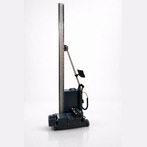
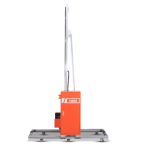
UV wall printing uses a vertical digital printer that applies UV-curable ink directly onto the wall surface. The ink is cured instantly by UV LED lamps, bonding permanently to the wall. There is no film, no adhesive, no seams — the graphic becomes part of the wall surface itself. Drywall, brick, concrete, glass, metal, and more are all printable.
Vinyl Wrap
A vinyl wrap is a custom graphic printed onto adhesive-backed vinyl film (typically on a roll-to-roll printer), then laminated for protection and carefully applied to the wall by hand. The vinyl conforms to the surface and adheres via its adhesive backing. The result looks like a mural but is a film layer applied on top of the wall.
2. Cost Comparison
For full equipment pricing context, see: wall printer prices. And for the broader cost picture vs. other methods: Digital Printing vs Traditional Wall Painting.
Cost Factor | UV Wall Printing | Vinyl Wrap |
|---|
Material cost per m² | ~$1.60 (ink only) | $12-30 (printed vinyl + laminate) |
Typical installed cost per m² | $17-62 | $27-70 |
Surface preparation cost | Low (clean; occasional primer) | Moderate (textured surfaces need special adhesive) |
Installation labour | Machine setup + print; mostly unattended | Skilled hand application; time-intensive |
Cost to refresh / replace | $30-60/m² (repaint + reprint) | Removal cost + new vinyl cost |
Multi-location consistency cost | Very efficient — same file, any location | Each install is separate; consistency harder |
Material cost is dramatically lower for UV printing ($1.60/m² vs $12-30/m² for vinyl). At scale and for permanent installations, UV printing is typically more cost-effective. Vinyl can be competitive for one-off, short-term, or highly irregular-surface projects.
3. Durability
The UV ink durability picture vs vinyl:
Durability Factor | UV Wall Printing | Vinyl Wrap |
|---|
Indoor lifespan | 4-8 years | 3-7 years |
Outdoor lifespan | 2-3 yrs (5+ with varnish) | 3-6 years (outdoor-grade vinyl) |
High-humidity performance | Excellent — no adhesive to fail | Poor — edges lift, bubbles form |
High-temperature performance | Excellent — cured to surface | Moderate — adhesive can soften |
Edge integrity over time | No edges — direct to wall | Edges can lift, peel, collect dirt |
Scratch resistance | High — hard cured surface | Moderate — laminate scratches |
The critical durability difference: vinyl has edges and an adhesive layer, both of which are failure points over time — particularly in humid environments (kitchens, bathrooms, pool areas) and high-temperature zones. UV printing bonds directly to the wall with no edges or adhesive, eliminating these failure modes entirely.
4. Surface Compatibility
UV wall printing handles a wider range of flat surfaces; vinyl handles curved and highly irregular surfaces better. For the full surface guide, see: What Surfaces Can a Wall Printer Print On?.
Surface | UV Wall Printing | Vinyl Wrap |
|---|
Smooth flat walls | Excellent | Excellent |
Textured walls (brick, render) | Good (sensor compensation) | Moderate (special adhesive; texture shows) |
Curved / cylindrical surfaces | Limited (mild curves only) | Excellent — conforms to curves |
Glass / metal (with prep) | Excellent | Good |
Highly irregular surfaces | Poor | Good (conforms) |
Floors | Excellent (TDX-W) | Moderate (specialist floor vinyl) |
This is the clearest functional distinction: for flat and mildly textured surfaces, UV printing is superior; for genuinely curved or highly irregular surfaces, vinyl’s ability to conform is a real advantage.
5. Installation and Disruption
Installation Factor | UV Wall Printing | Vinyl Wrap |
|---|
Setup time | ~15 minutes | Minimal (no machine) but more prep |
Print/application time (20 m²) | 4-8 hrs (mostly unattended) | 4-8 hrs (skilled hand application) |
Skill dependency | Machine does the work consistently | Highly dependent on installer skill |
Risk of defects | Low (automated) | Bubbles, misalignment, edge lift (installer error) |
On-site equipment | Printer required on site | No printing equipment; vinyl pre-printed |
Disruption to business | Minimal (quiet, no fumes) | Minimal-moderate |
6. Removability and Updates
This is where vinyl has a genuine advantage for specific use cases. Vinyl is designed to be removed — making it ideal for short-term, frequently-changed, or temporary graphics. Professional removal of vinyl leaves the wall intact (though adhesive residue and potential paint damage are risks on older installations).
UV prints are permanent — updated by repainting the wall and reprinting. This is simple and cost-effective for planned refreshes (a single working day), but it is not ‘peel-off’ removable like vinyl. For a graphic you intend to change monthly, vinyl may suit better; for a graphic intended to last years with occasional planned refreshes, UV printing is more practical and durable.
7. The Verdict: Which Should You Choose?
Your Situation | Recommended | Why |
|---|
Permanent brand wall (offices, restaurants) | UV Wall Printing | Durability, no edges, cost-effective long-term |
High-humidity area (kitchen, pool, bathroom) | UV Wall Printing | No adhesive to fail; moisture-resistant |
Multi-location brand consistency | UV Wall Printing | Identical reproduction; efficient at scale |
Textured or brick walls | UV Wall Printing | Direct print; vinyl struggles with texture |
Curved columns / cylindrical surfaces | Vinyl Wrap | Conforms to curves UV can’t reach |
Very short-term / monthly-change graphics | Vinyl Wrap | Designed for easy removal |
No on-site printing access | Vinyl Wrap | Pre-printed; no equipment needed on site |
Floor graphics | UV Wall Printing (TDX-W) | Direct, durable, no lifting edges |
Q: Is vinyl wrap cheaper than wall printing?
On material cost, no — vinyl costs $12-30/m² versus $1.60/m² for UV ink. On installed cost, they overlap ($27-70/m² for vinyl vs $17-62/m² for UV printing). For permanent installations and multi-location projects, UV printing is typically more cost-effective. Vinyl can be competitive for one-off, short-term, or curved-surface projects.
Q: Does vinyl wrap peel off over time?
Vinyl can peel, bubble, or lift at the edges over time — particularly in high-humidity or high-temperature environments. This is the most common vinyl failure mode and is inherent to any adhesive-based film. UV wall printing has no adhesive layer and no edges, eliminating this failure mode entirely.
Q: Can I print on a curved column with a wall printer?
UV wall printers handle mild curves but cannot print on strongly curved or cylindrical surfaces — the print head requires a relatively flat surface within its distance range. For columns and cylindrical surfaces, vinyl wrap is the better choice. For all flat and mildly textured surfaces, UV wall printing is superior.